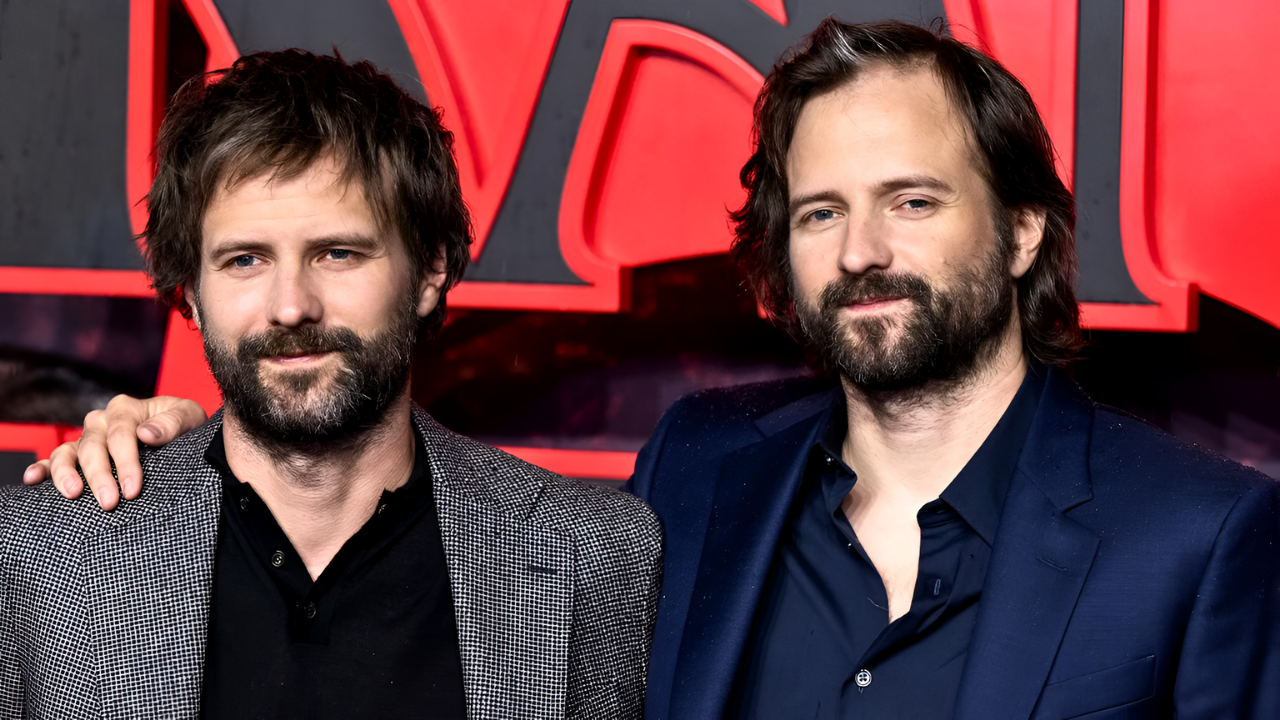
Netflix’s Stranger Things Season 5 premiered with unprecedented viewership metrics, capturing 59.6 million views across its first five days in November 2025. This achievement surpassed all English-language series premieres on the platform and landed among Netflix’s top three debut weeks globally.
The finale dropped on December 31, 2025, setting a New Year’s Day viewership record and propelling the season to 105.7 million total views, ranking ninth on Netflix’s all-time English-language series list.
The Departure Question
Behind the record-breaking success lies an unexpected institutional shift. The Duffer Brothers, creators of Stranger Things, announced their departure from Netflix in August 2025, following a four-year exclusive deal with Paramount, effective April 2026.
Their exit comes as their flagship series reaches its creative and commercial zenith, raising questions about timing, creative differences, and the future of prestige television production in Hollywood.
Theatrical Dreams

The brothers’ motivation for leaving Netflix was specific: access to theatrical film production. In a September 2025 interview at Variety’s Entertainment & Technology Summit, Ross Duffer stated, “When Matt and I were contemplating our next steps, it really boiled down to our desire to create a movie, specifically an original film.”
Matt Duffer added, “Our focus was solely on films. It’s peculiar that we found ourselves in television, given our minimal interest in it.” Paramount’s four-year deal explicitly supports their ambition to write, produce, and direct large-scale theatrical features.
The Unfinished Business

While preparing their Netflix exit, the Duffer Brothers were simultaneously overseeing multiple projects at the platform that were being brought into production. Among these was The Talisman, a long-anticipated adaptation of Stephen King and Peter Straub’s 1984 bestselling novel about a 12-year-old’s perilous quest across alternate realities.
Initially announced in 2021, the project had promised the brothers’ deep dive into genre fantasy adaptation; however, by late 2025, circumstances had shifted dramatically.
The Cancellation
Netflix officially canceled the adaptation of The Talisman in late December 2025, after nearly four years of development. The Duffer Brothers confirmed the project’s demise directly to Comic Book Resources, marking the end of their most ambitious non-Stranger Things venture.
Ross Duffer revealed: “Sadly, Talisman is no longer at Netflix, so we’re not involved.” The cancellation transferred all rights away from the streaming platform, effectively ending the brothers’ involvement with King’s epic fantasy.
Fan Disappointment
The cancellation devastated Talisman readers and Stranger Things fans who had anticipated the brothers’ venture into King’s darker, more sprawling fantasy universe. Industry observers noted that the timing proved particularly cruel, releasing the news during the holiday season, weeks after the massive premiere of Stranger Things Season 5.
Social media discussions have revealed deep frustration among King’s devoted fan base, for whom The Talisman has become a symbol of Hollywood’s adaptation failures.
The Brothers’ Admission
Matt Duffer confronted the reality of their failure head-on in the same CBR interview. He stated, “I think it was probably naive of us to think we could break The Talisman.” The word “naive” stung not as self-deprecation but as hard-earned wisdom.
The admission acknowledged a larger truth: The Talisman carries a curse spanning four decades of failed adaptation attempts, and even the most accomplished creators cannot overcome it through sheer talent or resources.
Spielberg’s Long Shadow
Steven Spielberg’s involvement with The Talisman began in 1982, before the novel was even published in 1984, when his company Amblin Entertainment secured the rights. Over the course of four decades, the legendary director remained attached to multiple adaptation attempts, including a failed TNT miniseries in 2006.
Ross Duffer recalled: “When I interned at Kennedy Marshall back in college, I remember reading a movie script for Talisman. So it’s been in development forever.” Spielberg’s four-decade failure illustrated the project’s seemingly insurmountable complexity.
The Narrative Paradox

The Talisman tells the story of young Jack Sawyer’s journey across the American landscape and the Territories, a parallel fantasy realm filled with magic, monsters, and doppelgängers.
The novel’s 646-page sprawl combines road-trip adventure, horror, and fantasy in ways that critics have labeled “unfilmable” due to its genre-blending scope and Jack’s coming-of-age arc, which runs parallel to supernatural stakes. The Duffer Brothers recognized this paradox: the same elements that made the novel beloved, its ambitious genre-defying scope, made it resistant to screen translation.
The Territories Connection
A secondary revelation emerged: the Duffer Brothers saw thematic resonance between The Talisman’s Territories and Stranger Things’ Upside Down, both serving as shadow worlds where ordinary and supernatural collide. This structural similarity convinced the brothers they could crack King and Straub’s adaptation.
However, shared architecture proved insufficient, as narrative ambition outpaced the available production frameworks. The cancellation suggests that even conceptual alignment cannot overcome the fundamental storytelling challenges inherent in specific literary properties.
The Development Timeline Squeeze
The Duffer Brothers signed on to The Talisman in 2021, positioning the project as their major post-Stranger Things theatrical venture. However, Netflix’s streaming model conflicted with their theatrical ambitions.
By 2025, as the brothers’ Netflix contract was approaching expiration, The Talisman had consumed four years of development without showing forward momentum toward production. The project’s cancellation revealed a crucial mismatch: Netflix’s platform could not support the brothers’ creative vision for large-scale, infrequent releases.
Paramount’s Theatrical Pivot

Paramount’s deal with the Duffer Brothers explicitly targets theatrical releases, a strategic differentiation from Netflix’s streaming-exclusive model. The agreement permits them to write, produce, direct, and oversee feature films released to global cinema, offering creative freedoms and revenue-sharing arrangements that Netflix’s licensing model precludes.
The Talisman exemplifies this divide: King’s fantasy epic demands the scale, visual spectacle, and theatrical distribution that theatrical filmmaking provides, conditions that Netflix’s 2025 operating structure could not guarantee.
Stephen King’s Curse Uncovered

King himself acknowledged the struggles of The Talisman’s adaptation over the decades. In interviews, he expressed resigned acceptance that the novel resists screen translation, a sentiment echoed by every filmmaker who attempted it.
The cancellation marked the fourth major failed initiative: Spielberg’s film (1980s–2006), Mike Flanagan’s consideration, Netflix’s original focus before greenlighting the Duffers, and now the Duffers’ withdrawal. Each failure suggested the novel’s literary strengths, sprawling mythology, deep character interiority, and cross-dimensional mythology translate poorly to visual media.
Duffer Expertise Insufficient

The Duffer Brothers’ track record creating Netflix’s flagship series, pioneering cinematic television through Stranger Things Seasons 3–4 (reportedly budgeted at $30 million per episode), and commanding global viewership should theoretically position them to succeed where Spielberg and others failed.
Their inability to break the Talisman curse signals a fundamental truth: creative talent, studio resources, and production budgets cannot overcome specific narrative or adaptation obstacles. The cancellation humbled the most accomplished television creators of their generation.
What Comes Next?

The Duffer Brothers’ Paramount deal is set to begin in April 2026, three months after Netflix’s Stranger Things concludes. Will their first theatrical venture attempt another beloved-but-cursed property, or will they focus on original films? Paramount executives expressed confidence in their theatrical ambitions.
Yet, the Talisman cancellation raises questions: Can Hollywood’s most enormous budgets and brightest talents truly adapt any property, or are specific literary works intrinsically resistant to screen translation? The answer may reshape the adaptation strategy industry-wide.
A Broader Industry Reckoning
Hollywood’s adaptation machine generates hundreds of projects annually, yet failures vastly outnumber successes. The cancellation of The Talisman exemplifies this reality: even legendary directors (Spielberg), prestigious studios (Netflix, Paramount), and accomplished creators (the Duffer Brothers) cannot guarantee success.
This pattern suggests that the industry may be overestimating the adaptation potential while underestimating the narrative complexity. Investors, executives, and audiences should recalibrate expectations: literary masterpieces often resist transformation precisely because their power derives from literary form, something no visual medium can replicate exactly.
Implications for Streaming Giants
Netflix’s cancellation of ‘Talisman’ signals a strategic retreat. The platform invested four years in an unproduced adaptation only to cede rights to competitors. This pattern of acquisition, development, and cancellation repeats across Netflix’s original content strategy, raising questions about the rigor of Project Greenlight.
For Paramount and other studios, the lesson cuts sharper: theatrical budgets and theatrical ambitions require fundamentally different assessment criteria than streaming content. The Talisman failure may catalyze stricter adaptation of greenlight standards across the industry.
Stephen King’s Adaptation Landscape

Despite Talisman’s failure, Stephen King adaptations continue proliferating. Billy Summers, Fairy Tale, Mike Flanagan’s Carrie series, and others generate commercial interest and occasional acclaim. However, the success rate remains low, with perhaps 20–30% of King adaptations achieving critical or commercial acceptance.
The Talisman cancellation underscores a paradox: King’s prose generates devoted readerships precisely because his storytelling achieves effects that visual media struggles to replicate. Screenwriters, directors, and producers must accept that translation is not a matter of fidelity, and some stories may resist translation entirely.
The Cost of Ambition

The Duffer Brothers’ admission of “naive” ambition reflects hard-won wisdom. Attempting The Talisman cost Netflix millions in development, and the brothers’ years of creative energy were diverted from projects they ultimately abandoned. Paramount, aware of this history, may approach the Talisman acquisition cautiously if the project transfers there.
The broader question emerges: Should Hollywood continue pursuing “unfilmable” properties, or invest in original screenplays more suited to visual storytelling? The Talisman cancellation may not represent a failure, but rather a rational reallocation of creative resources.
The Unfinished Quest

The Talisman remains optioned, cursed, and unconquered. Steven Spielberg kept it under contract for four decades; now it awaits the next filmmaker willing to believe they can succeed where he, Netflix, and the Duffer Brothers could not. The novel itself endures undiminished by adaptation failures, its 646 pages offering readers the epic journey that screens cannot match.
Perhaps that is The Talisman’s true legacy: a reminder that literary power does not require cinematic translation to matter, and that some stories are stronger when unfilmed, existing permanently in the imagination, where no budget constraint or director’s vision can diminish their magic.
Sources:
Variety, “‘Stranger Things 5’ Opens With 59.6 Million Views, Netflix’s Biggest English-Language Premiere Ever”
Variety, “Stranger Things 5 Ratings Record: Netflix’s No. 9 English-Language Series of All Time With 105.7 Million Views”
Variety, “Duffer Brothers on Netflix Exit, Stranger Things Future”
Deadline, “Duffer Brothers Close 4-Year Paramount Deal, Set Netflix Exit”
Paramount Official Press Release, “Paramount Signs Multi-Year Exclusive Deal With Matt and Ross Duffer”
CBR, “The Duffer Brothers Confirm ‘The Talisman’ Series at Netflix”