
Meta Platforms has initiated sweeping workforce reductions across its Reality Labs division, cutting more than 1,000 positions as the tech giant pivots decisively away from its ambitious metaverse vision toward artificial intelligence-powered wearable devices. The restructuring, which began on January 13, 2026, eliminates roughly 10 percent of Reality Labs’ 15,000-person workforce and marks the closure of three acquired virtual reality game studios, signaling a fundamental reassessment of the company’s hardware strategy after accumulating more than $70 billion in losses since 2020.
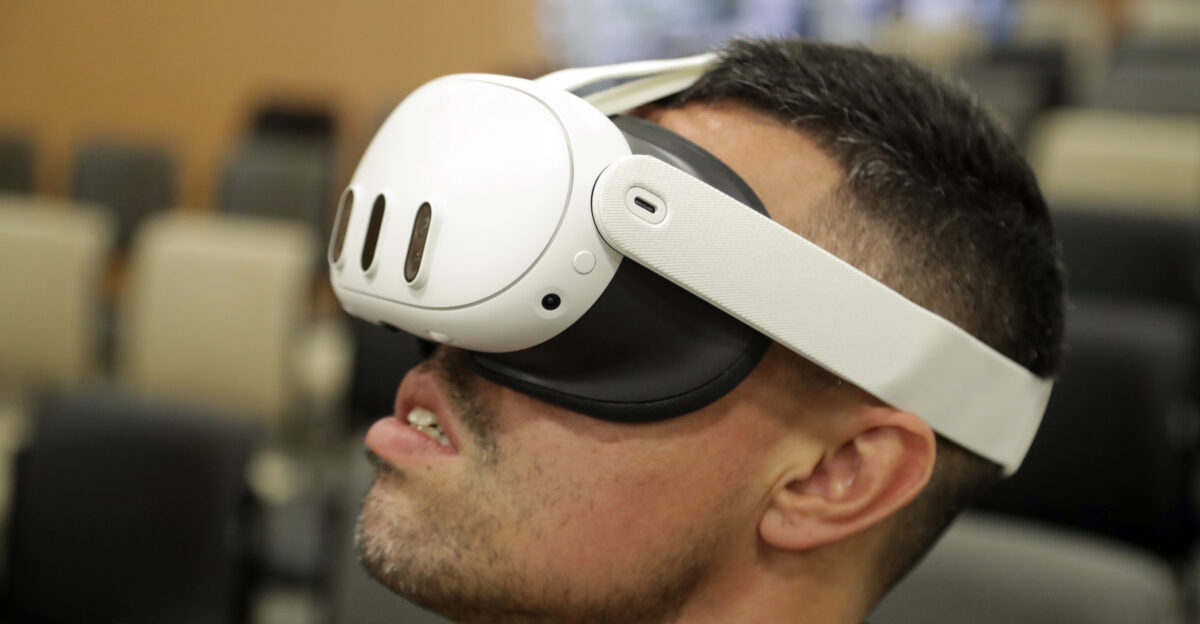
The dramatic shift comes as Meta’s Ray-Ban smart glasses have surged in popularity, prompting discussions with manufacturing partner EssilorLuxottica to potentially double production capacity to 20 million units annually by year-end. Meanwhile, Quest headset sales declined 16 percent in early 2025 compared to the prior year, underscoring the diverging consumer appetite for lightweight AI wearables versus immersive virtual reality experiences. The contrasting performance has forced Chief Executive Mark Zuckerberg to redirect resources toward products demonstrating tangible market traction, effectively shelving the metaverse ambitions that once defined the company’s identity after its 2021 rebranding.
Unsustainable Losses Force Strategic Realignment

Reality Labs has hemorrhaged cash at an alarming rate, posting a $4.43 billion operating loss in the third quarter of 2025 alone against just $470 million in revenue from Quest headsets and Ray-Ban smart glasses combined. Since its establishment in 2020, the division has accumulated losses exceeding $70 billion as Meta poured resources into developing virtual reality hardware, augmented reality technologies, and the Horizon Worlds platform. Despite modest revenue growth of 74 percent year-over-year in the third quarter, the financial burden proved unsustainable as the division’s expenses reached $4.7 billion in that period, driven primarily by infrastructure investments and expanded headcount.
The massive expenditure failed to generate mainstream consumer adoption of Meta’s metaverse platforms or drive sufficient Quest headset sales to justify continued investment at previous levels. With Reality Labs representing a substantial portion of Meta’s overall operating expenses while core advertising revenue funds these experimental ventures, the company faced mounting pressure from investors to demonstrate clearer returns or reduce spending in the division.
Studio Closures Leave VR Game Development in Limbo

Meta has shuttered Armature Studio, Twisted Pixel Games, and Sanzaru Games—three developers acquired between 2020 and 2022 that produced some of the platform’s most prominent virtual reality titles. Armature created the Quest port of Resident Evil 4, Twisted Pixel developed Deadpool VR (released just two months prior to the closure), and Sanzaru built the Asgard’s Wrath franchise. The closures leave uncertain the future support and development roadmap for these titles, which served as flagship content attracting users to Meta’s Quest ecosystem.
Affected employees began sharing termination notices through professional networks on January 13, with former developers expressing shock at the abrupt nature of the restructuring. Chief Technology Officer Andrew Bosworth, who oversees Reality Labs, called what he described as the year’s “most important” in-person meeting for January 14 at Meta’s Menlo Park, California headquarters, though specific details of future plans for the division’s remaining teams were not immediately disclosed.
Smart Glasses Emerge as Consumer-Driven Alternative
The collapse of Meta’s virtual reality ambitions coincides with remarkable commercial success for its Ray-Ban branded smart glasses, which enable users to capture photos, make calls, and access AI features without requiring a smartphone. EssilorLuxottica was already on track to reach its initial 10 million unit production target by late 2026 when discussions began about doubling that capacity to 20 million units, with potential to exceed 30 million if demand continues accelerating. Meta has captured an estimated 73 percent share of the global smart glasses market, according to CounterPoint Research, validating the company’s bet on practical, everyday wearable technology.
Beyond the Ray-Ban glasses, Meta is developing wristband technology that will enable gesture-based interactions, representing a full commitment to AI-powered wearables as the next computing platform. The pivot reallocates budget previously earmarked for metaverse development toward scaling manufacturing partnerships and expanding the feature set of lightweight devices that integrate seamlessly into daily routines rather than requiring users to enter fully immersive virtual environments.
Market Consequences and Path Forward
Meta’s stock declined approximately 2 percent in the days following the layoff announcements, reflecting investor uncertainty about the transition period, though the market had responded positively to earlier reports of cost-cutting plans in December 2025. The restructuring creates opportunities for competitors including Apple’s Vision Pro and Sony’s PSVR2 to capture market share in virtual reality, while rivals such as Apple and Google may intensify development of their own smart glasses offerings in response to Meta’s demonstrated success in that category.
The layoffs represent a broader recalibration across the technology sector, where companies are increasingly scrutinizing expensive, long-term bets that have yet to demonstrate clear paths to profitability. For Meta, the shift toward AI wearables offers a more immediate revenue opportunity aligned with observable consumer preferences, even as it marks the end of Zuckerberg’s vision of the metaverse as the internet’s next frontier. The coming months will reveal whether the company can successfully transfer its virtual reality expertise into the wearables market while maintaining its dominant position in targeted advertising that continues funding these experimental ventures.
Sources:
“Meta Plans to Cut 10% to 15% of Employees in Reality Labs.” The New York Times, 12 Jan 2026.
“Meta Seeks to Double Ray-Ban Glasses Output After Surge in Demand.” Bloomberg, 13 Jan 2026.
“Meta’s Reality Labs posts $4.4 billion loss in third quarter.” CNBC, 29 Oct 2025.
“Meta Lays Off 1500 People in Metaverse Division.” The Wall Street Journal, 14 Jan 2026