
For more than four decades, the McRib has been a limited-time fixture that drew long lines, fan-made tracking sites, and a devoted following. Now, a new federal class-action lawsuit claims that the sandwich’s enduring appeal rests on a fundamental misunderstanding of what is actually in it—and that McDonald’s bears legal responsibility for that alleged confusion.
Historic challenge to an iconic sandwich
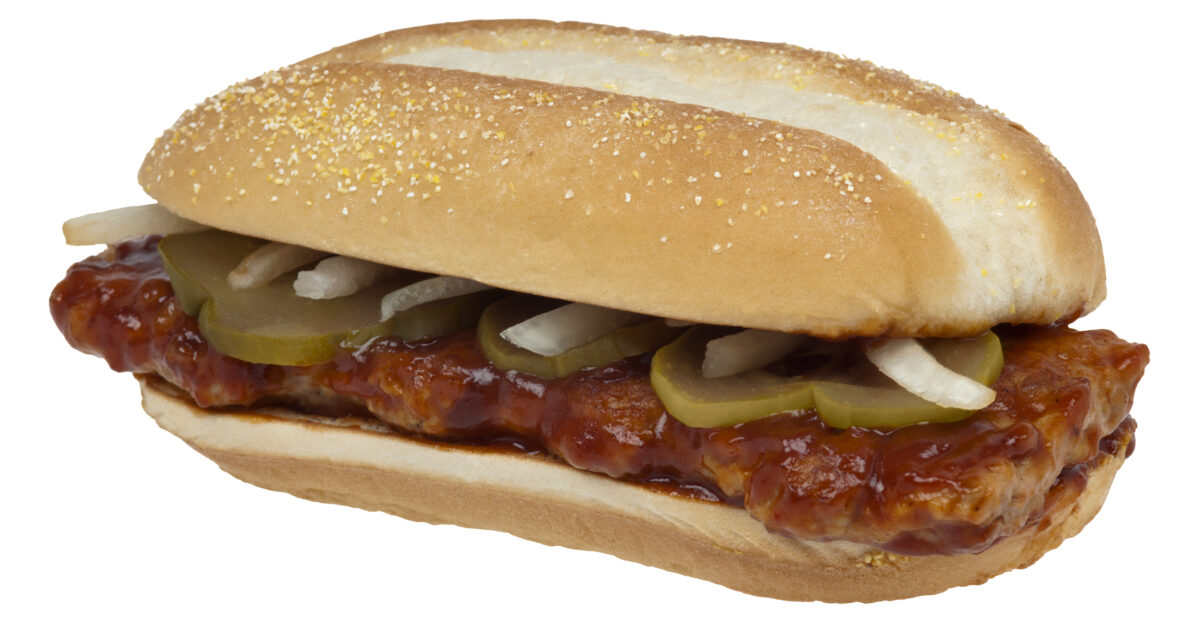
Filed on December 23, 2025, in the U.S. District Court for the Northern District of Illinois, the case is the first major class-action lawsuit aimed specifically at the McRib in its 44-year history. McDonald’s has faced high-profile litigation before, including a multibillion-dollar discrimination lawsuit and efforts to claw back executive compensation; however, this complaint targets the naming, presentation, and pricing of a single menu item.
McRib has been advertised and sold nationwide for decades and has become a well-known limited-time offering; the financial exposure could reach into the hundreds of millions of dollars if the court certifies a nationwide class and awards damages.
Dispute Over “Rib” Meat and Restructured Pork
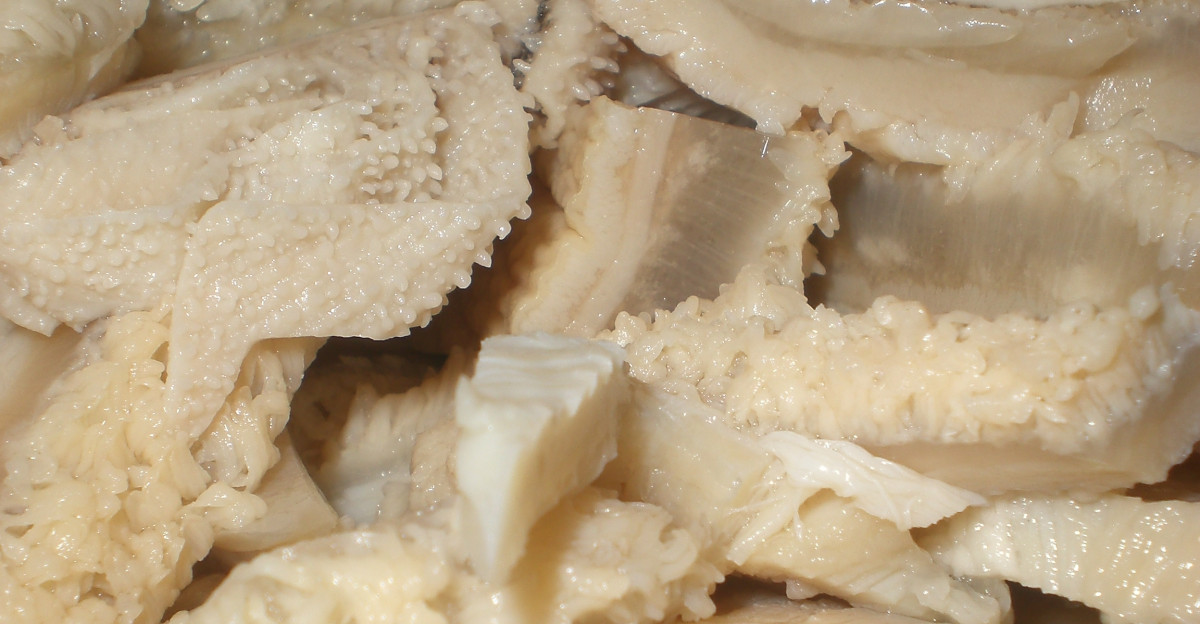
At the heart of the complaint is a claim that the McRib patty contains no pork rib meat at all, despite its name and its molded appearance that mimics a small rack of ribs. Instead, the plaintiffs say the patty is made from “restructured” pork—a blend of ground, lower-value cuts such as shoulder and organ parts, including heart, tripe, and scalded stomach.
Four named plaintiffs from California, New York, Illinois, and Washington, D.C., allege they paid a premium price because they believed they were buying a rib-based sandwich. They say the use of the word “Rib” and the rib-like shape of the patty led reasonable consumers to assume it contained actual rib meat.
The complaint contends that McDonald’s has long known that consumers draw that conclusion. It points to the sandwich’s rib-shaped patty, packaging that suggests a higher-end cut, and promotional campaigns built on scarcity and fan anticipation, arguing that these elements collectively reinforce the implication that the sandwich is made from ribs.
Price, Marketing, and Claims of Deception
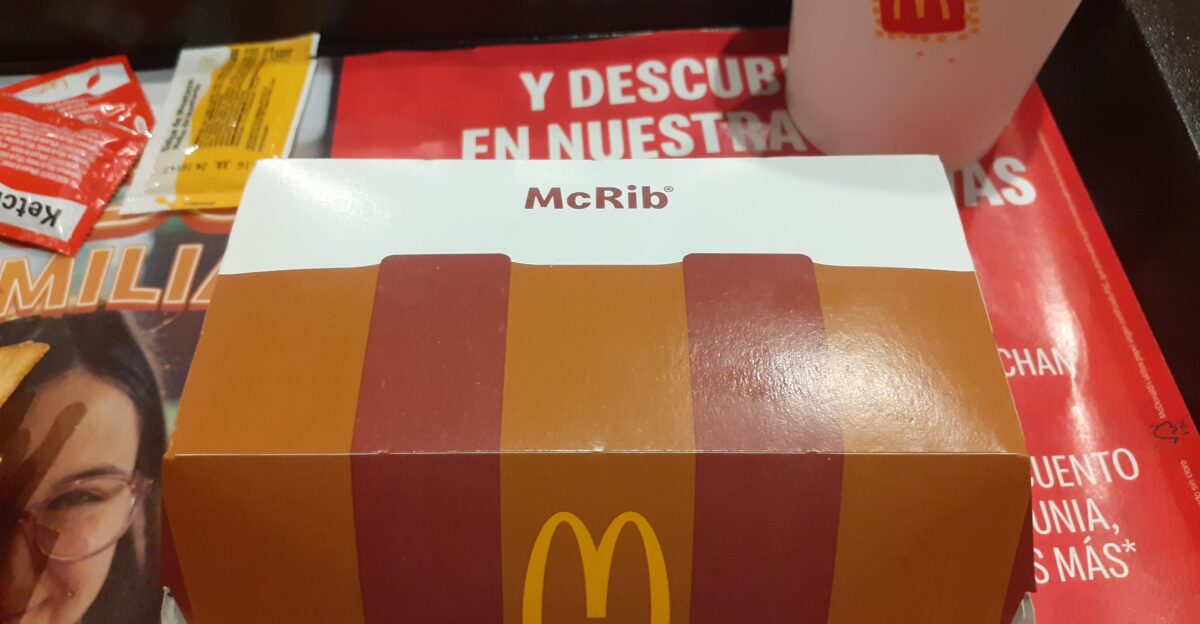
The plaintiffs focus heavily on price, noting that the McRib has at times sold for more than a Big Mac. Court filings cite examples of the McRib being priced at $7.89 before tax at some locations, with an average price of $5.63 in December 2024. They argue that this higher price relies on the perception that customers are paying for more expensive rib meat rather than cheaper cuts and organs.
In their view, this is not a simple labeling oversight but a deliberate strategy: charging more for a product positioned as premium while using lower-cost inputs. The complaint accuses McDonald’s of fraud, stating that the company profited from consumers’ belief that the sandwich contained real rib meat.
The lawsuit lays out 16 legal causes of action, including fraudulent omission, fraudulent and negligent misrepresentation, breach of warranty and contract, and alleged violations of consumer protection laws in multiple states. The breadth of the claims is meant to underscore the plaintiffs’ position that the alleged misrepresentation was systematic rather than incidental.
McDonald’s Description and Meat Science

McDonald’s official description of the McRib characterizes it as “seasoned boneless pork” served with barbecue sauce, onions, and pickles. The company does not clearly state that the meat comes from ribs, but the plaintiffs argue that the name “McRib,” combined with the patty’s appearance and related marketing, makes that implication unavoidable for the average customer.
The complaint cites prior reporting on the production of the sandwich, including a 2011 Chicago Magazine article that examined the use of restructured meat technology in the development of the McRib. That reporting described a process designed to combine smaller, less expensive cuts into a uniform product that can be pressed into a desired shape, such as a rack of ribs. The lawsuit uses this history to argue that McDonald’s understood from the outset how the product’s design would influence consumer perception.
The plaintiffs also reference U.S. Department of Agriculture data indicating that actual pork ribs are more expensive than many of the parts the complaint alleges are used in the McRib. They say this cost difference explains why a restructured patty would be more profitable if sold under a rib-focused name.
Company Response and Broader Industry Impact
McDonald’s has rejected the allegations, calling the lawsuit “meritless” and accusing the plaintiffs of distorting the facts. In a public statement, the company said the McRib is made with “100% pork” from U.S. farmers and suppliers, and it specifically denied using heart, tripe, or scalded stomach in the patty. The company’s wording emphasizes pork generally rather than rib meat in particular, a distinction that could become central if the case proceeds.
The lawsuit seeks to represent all individuals in the United States who purchased a McRib in the four years preceding December 23, 2025, dating back to late 2021. Given McDonald’s footprint of more than 13,000 U.S. locations and the sandwich’s recurring promotions, that could amount to millions of consumers.
The plaintiffs are seeking compensatory and punitive damages, restitution, and attorney’s fees. With unit prices typically between $5 and $8 and the potential for punitive awards if fraud is found, they argue that McDonald’s financial exposure could reach into nine figures. The company is expected to move to dismiss the case; if that effort fails, the next phase would likely involve document production, internal communications, and expert analysis of consumer expectations and meat composition.
The lawsuit also comes at a time when other large chains have faced disputes over how ingredients are labeled, including high-profile cases involving seafood and other animal products. Legal observers suggest that if a court determines that naming, shape, and scarcity-driven marketing can mislead reasonable consumers, even when ingredient lists use broader terms, other limited-time, aspirationally named items may face similar scrutiny.
Four individuals stand as the face of the case: Peter Le of California, Charles Lynch of New York, Dorien Baker of Illinois, and Darrick Wilson of Washington, D.C. They do not allege physical harm; instead, they claim they overpaid for a product that was not what they reasonably believed they were buying.
As the case moves forward, it will test how courts balance product names, visual design, and marketing against technical ingredient disclosures. The outcome could influence how chains label and present signature items, how closely product names must track specific cuts of meat, and what level of detail consumers can expect when ordering longstanding favorites that trade on nostalgia and scarcity.
Sources:
“McDonald’s faces class-action lawsuit over ‘deceptive’ McRib sandwich” — Global News, January 5, 2026
“McDonald’s hit with lawsuit claiming McRib contains no real rib meat” — Fox Business, January 5, 2026
“McDonald’s class action alleges McRib sandwich contains no actual rib meat” — Top Class Actions, January 1, 2026
“Lawsuit accuses Chicago-based McDonald’s of deception; McRib has no rib meat” — CBS Chicago, January 3, 2026
“The Invention of the McRib and Why It Disappears from McDonald’s” — Chicago Magazine, October 2011
“McRib lawsuit | PDF | Class Action | Misrepresentation” — Scribd (Court Filing 1:25-cv-15609), January 4, 2026