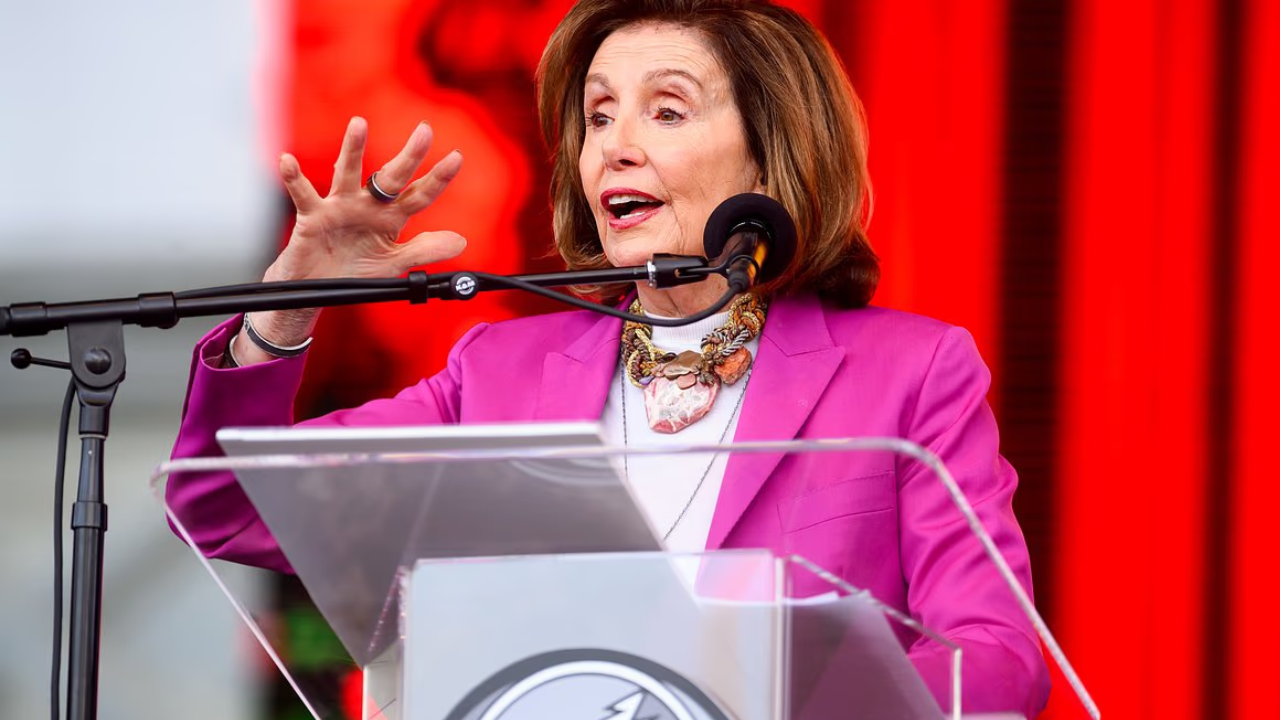
Former House Speaker Nancy Pelosi’s tribute appearance at a public memorial for late Grateful Dead guitarist Bob Weir in San Francisco has drawn viral backlash on social media across the U.S., with widely shared clips and commentary criticizing her behavior, singing, and appearance.
Thousands gathered at San Francisco’s Civic Center for the event, where musician John Mayer performed the Grateful Dead classic “Ripple” as part of a public celebration of Weir’s life. During Mayer’s performance, Pelosi appeared on stage, singing and swaying along as cameras and audience members recorded the moment. Clips of her appearance were quickly posted and reposted online, where users debated her demeanor and role at the tribute.
A politician among Deadheads
The tribute drew longtime Deadheads, musicians, public officials, and other fans mourning Weir, who died earlier this month at age 78. Pelosi, a self‑proclaimed Deadhead and one of San Francisco’s most recognizable political figures, joined the lineup of speakers and performers on stage. In videos from the event, she can be seen standing near Mayer as he plays “Ripple,” appearing to quietly sing or mouth the lyrics while swaying to the music. Audience reaction in the clips includes audible applause, while online reactions later in the day highlight surprise and criticism in equal measure.
Praise, stumbles, and a political message
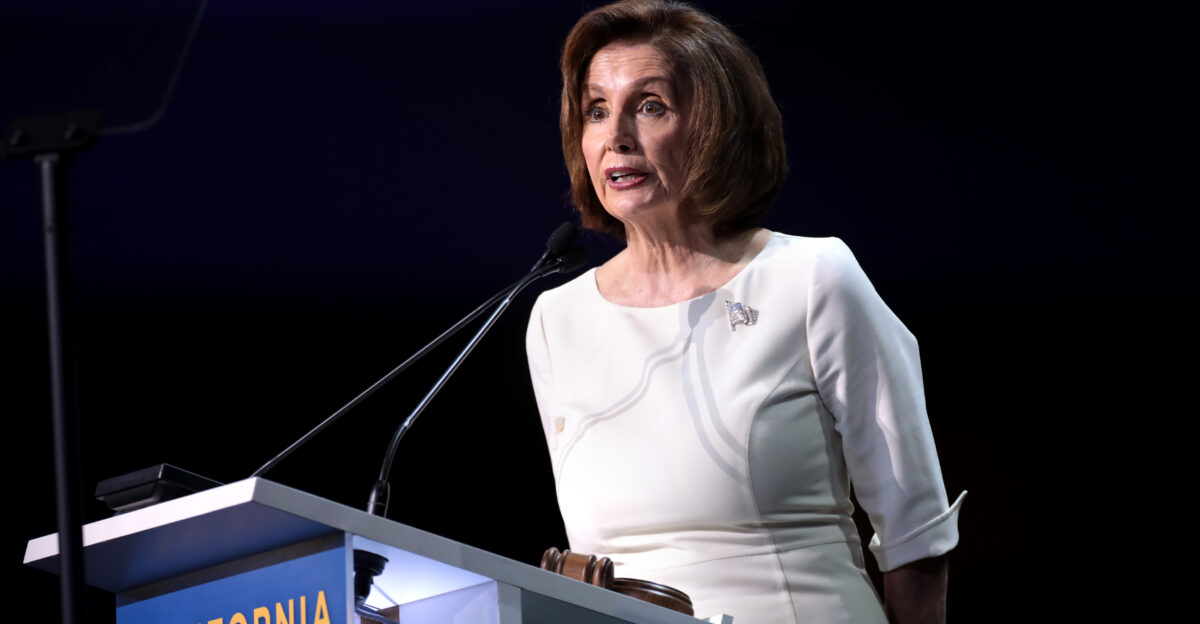
When Pelosi later took the microphone to speak about Weir, she described him as “not just a magician, musician – a magician too – he was a force of nature,” echoing language that appeared in multiple write‑ups about his larger‑than‑life musical legacy. Video and reporting note that she appeared to stumble over some of her words while reflecting on his life and influence.
Pelosi also used her remarks to urge civic participation. “[Weir] gave me this sign, and I’ll show it today, because I said Bobby really loved democracy, he loved our country,” she said, before holding up a sign reading “vote” and adding, “You know what he wanted everybody to do? Vote!” Applause can be heard from parts of the crowd in recordings, while later online commentary includes criticism from users who argue that overt political messaging did not fit the occasion.
Viral scrutiny and speculation
Within hours of the memorial, clips featuring Pelosi’s on‑stage singing and speech circulated on X and other platforms, where users sparred over her demeanor and decorum. Some posts accused her of overshadowing the memorial and questioned why she was speaking at the event, while others simply expressed surprise that she appeared beside Mayer during “Ripple.”
Several viral posts also speculated about Pelosi’s sobriety, with one widely cited X user asking, “Is Nancy Pelosi drunk at the Bob Weir Homecoming?” Fox News Digital reported that a spokesperson for Pelosi responded by stating that “Speaker Pelosi does not drink alcohol” and that “any claims to the contrary are false.” The article and available coverage do not present any evidence beyond online speculation to support the drinking accusations, and news reports characterize them as unsubstantiated claims circulating on social media.
Magenta suit and stage optics
Photos from the memorial show Pelosi wearing a bright magenta suit while many other people on stage appear dressed primarily in black. Social media posts highlighted by news outlets include users joking about the contrast and referring to her outfit as “somber magenta,” while others focused on her being “off‑key” in both singing and presentation.
Coverage and commentary about the memorial also emphasize that the event blended solemn remembrance with musical celebration, reflecting the free‑spirited culture associated with the Grateful Dead and many of their fans. In that context, some observers argued that colorful clothing and spontaneous on‑stage moments were not out of step with the band’s long‑standing embrace of individuality.
Mixed reactions and broader context

Reactions to Pelosi’s appearance were not uniformly negative. Articles and online discussions include comments from fans and observers who pointed to her long‑running association with San Francisco’s political and cultural life and her self‑described Deadhead identity as reasons why her presence at the tribute was unsurprising. Some commentators noted that the tribute’s guest list included local officials and national figures alongside musicians, suggesting that the event was intended to reflect both Weir’s musical impact and his civic and cultural ties.
On fan forums and in social threads, several Deadheads urged critics to consider the full program rather than judging the memorial solely by short clips of Pelosi. They pointed out that the tribute also featured performances and appearances by artists such as Joan Baez and Wynonna Judd, along with other collaborators and friends who shared stories and songs in Weir’s honor.
Remembering Bob Weir’s legacy
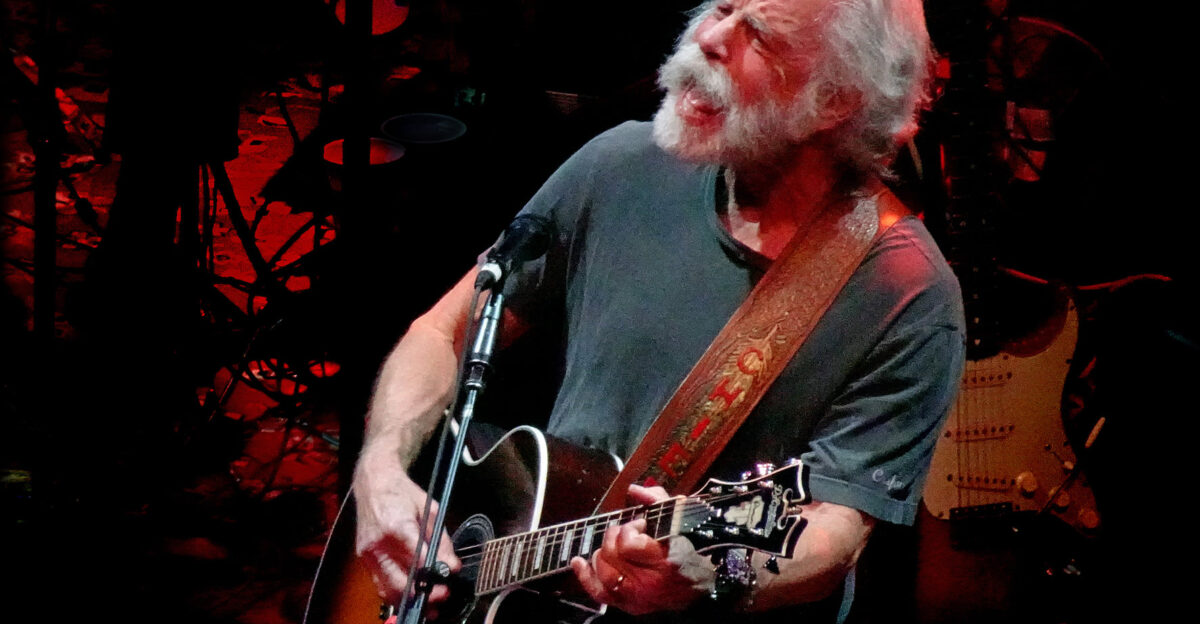
Weir’s death at 78 marked the loss of one of American music’s most influential and distinctive guitarists. As a founding member of the Grateful Dead and later a bandleader and solo artist, he helped shape a genre‑defying sound that drew on improvisation, extended live jams, and a blend of rock, folk, and psychedelic influences. Obituaries note that Grateful Dead and Weir’s later projects inspired generations of fans whose devotion turned concerts into communal gatherings and, for many, recurring “pilgrimages.”
According to a statement shared by his family, Weir died peacefully on Jan. 10, 2026, surrounded by loved ones after a cancer battle and subsequent lung problems. Coverage of the San Francisco event describes it as a celebration of life that invited storytelling, musical tributes, and spontaneous moments from the many people who felt connected to Weir’s music and legacy.
Politics, performance, and perception

News coverage and commentary note that the backlash to Pelosi’s appearance has reignited discussion about how prominent political figures navigate high‑profile cultural events and memorials. Media analysts quoted in reporting say that short video clips can magnify a single moment or person in ways that sometimes obscure the wider context of an event.
Pelosi, 85, has announced that she will not seek reelection and plans to retire from Congress when her current term ends in January 2027, increasing scrutiny on each of her public appearances. Supportive commentators frame her participation in the Weir tribute as consistent with her long‑standing ties to San Francisco’s arts and music communities, while critics see her performance as an example of a political figure drawing attention away from a moment that some felt should have centered primarily on musicians, family, and fellow Deadheads.
As of this week, beyond the spokesperson’s denial of drinking rumors, Pelosi’s office has not issued a detailed public statement addressing the broader social media reaction to her appearance. In the meantime, coverage of the memorial and its fallout underscores how Weir’s music continues to generate strong emotions and intense discussion, even as fans, friends, and public figures grapple with how best to honor his memory.
Sources:
“Nancy Pelosi faces social media backlash over behavior at Bob Weir tribute event.” Fox News Politics, January 17, 2026.
“Nancy Pelosi speaks at tribute for Grateful Dead legend.” Yahoo News, January 18, 2026.
“I didn’t get a chance to watch the tribute yet. Did anybody actually think Nancy Pelosi was drunk?” Reddit Grateful Dead community discussion, January 19, 2026.
“Nancy Pelosi MOCKED For Off-Key Singing, Magenta Suit At Bob Weir tribute.” Times of India Entertainment, January 19, 2026.